
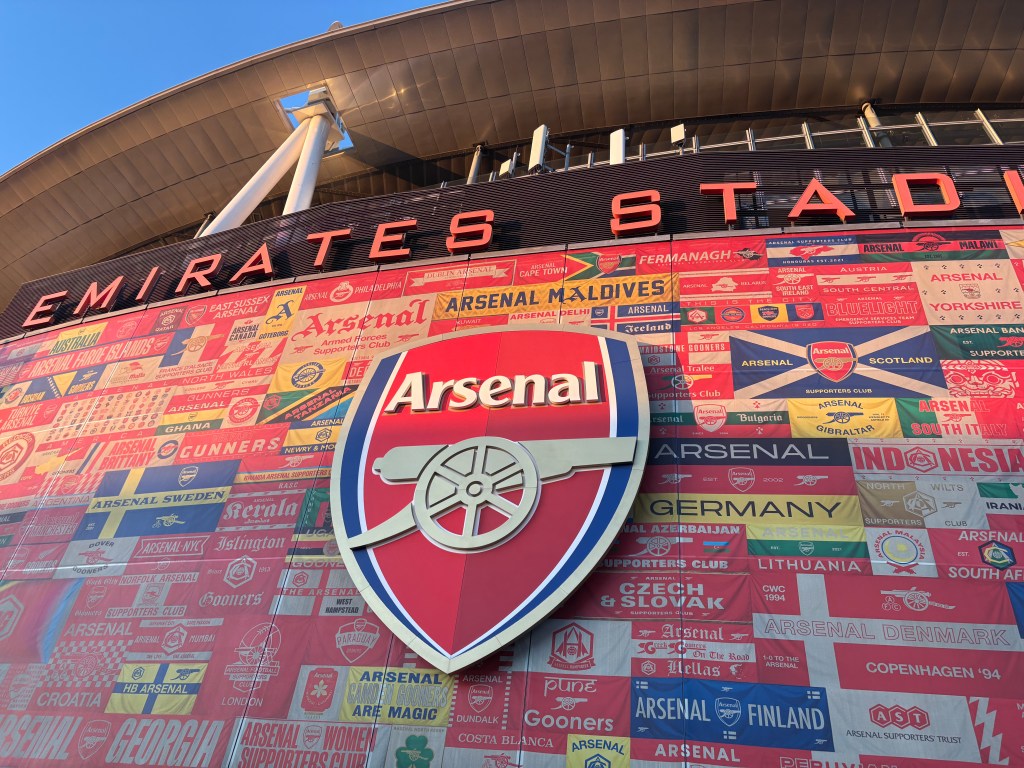
There is a debate that follows Arsenal around like a shadow. It is not about their tactics, their transfer policy, or even their title credentials. It is about their fans. Specifically, whether the atmosphere inside the Emirates Stadium is holding the team back. Having been there for one of the most telling matches of the 2025/26 season, here is what it actually feels like from the inside.
The match in context
Sunday 21 September 2025. Arsenal vs Manchester City, matchday five of the Premier League season. A full house of 60,161 at the Emirates. On paper, it was a fixture the football world had been waiting for, with two of the three genuine title contenders, facing each other before October.
Arsenal had enjoyed just under 80% of the possession in the opening ten minutes, but it counted for nothing when the visitors took the lead with their first attack of the game. Haaland started the move for the goal inside his own half, winning the ball and laying it off to Tijjani Reijnders before sprinting forward and leaving marker Gabriel chasing his shadow. Reijnders burst forward and returned the ball to Haaland, who took a touch before beating David Raya with his right foot. A goal, in the ninth minute, that came almost out of nowhere.
What followed was 84 minutes of Arsenal dominance, yet nothing to show for it on the scoreboard. City recorded their lowest ever possession average under Pep Guardiola in a top-flight league match — just 32.8%, the lowest ever for any Guardiola team in his 601 matches as a top-flight manager. Arsenal had the ball. Arsenal had the corners (eleven to City’s two). Arsenal pressed and probed. And for the vast majority of ninety minutes, Arsenal could not score.
Until the 93rd minute, when Gabriel Martinelli came off the bench, latched onto an Eberechi Eze ball over the top, and lobbed Gianluigi Donnarumma with a finish that sent the Emirates into scenes that had been building for the better part of two hours.
What the atmosphere was actually like
The atmosphere was tense from the moment Haaland scored. That much is fair and accurate. But tense in a specific way that is worth unpacking carefully, because it was not the anxious negativity of a crowd turning on their team. It was the collective held breath of 60,000 people watching a side they desperately want to succeed, dominating a match they felt they should be winning, and waiting — willing, urging, pleading for the goal that kept not coming.
Arsenal had the ball. Almost always, they had the ball. Final possession was 66.8% to 33.2% in Arsenal’s favour, with Arsenal attempting twelve shots to City’s five. City sat deep and absorbed and countered. The crowd understood what was happening. There was not necessarily panic about what Arsenal were doing — it was more of a frustration at the scoreline relative to the performance, which is a very different thing.
The anxiety you could feel was not the anxiety of a crowd losing faith. It was the anxiety of anticipation and watching wave after wave of pressure build and break without reward, and wondering whether today would be the day the dam refused to burst.
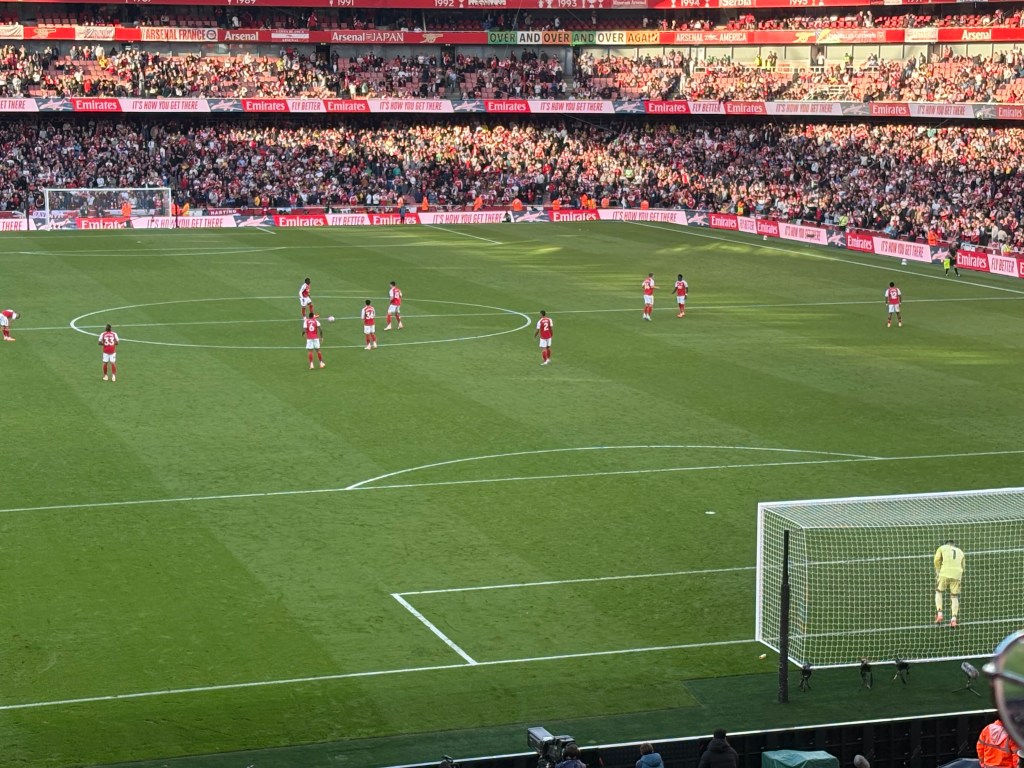
The elephant in the room — does the atmosphere affect the players?
This question of whether the tension inside the Emirates seeps down from the stands and into the boots of the players has become one of the more earnest debates in English football. Pundits have raised it. Former players have weighed in. The discourse around it has grown particularly loud during Arsenal’s recent title challenges, with the suggestion that the club’s 22-year wait for the league title has created a weight of expectation so heavy it can be felt on the pitch.
Watching from inside the stadium against City, though, the players did not look like a team being inhibited by their crowd. There were no sloppy mistakes born of nerves, no hesitation in possession, no players looking to the stands with that wide-eyed glance that tells you the atmosphere has got inside their heads. Arsenal played the game they needed to play — patient, dominant, physical — against a team explicitly set up to frustrate them. The issue was not anxiety. The issue was that breaking down a Guardiola side defending a one-goal lead is one of the hardest things in football, and on this day Arsenal came within three minutes of failing to do it.
The context that makes judgement difficult
The debate about the Emirates atmosphere is long-running and multifaceted — touching on ticket prices, the demographic mix of the crowd and the presence of fans who are attending their first or second game. However, definitive judgement on the Emirates atmosphere difficult, particularly as the context of this match was unusual, in ways that made any straightforward crowd reading almost impossible.
Arsenal rarely concede at home. Haaland’s opener was the earliest goal Arsenal had conceded in the Premier League since September 2024 — also a ninth-minute goal, also scored by Haaland, also for Manchester City. A home crowd that is accustomed to their team controlling games from the front found itself in an unfamiliar position from the ninth minute: chasing, not leading. The crowd had to adapt to circumstances it rarely faces.
The 93rd minute
Whatever your view of the Emirates atmosphere before Martinelli scored, there is no debate about what happened after.
Seven minutes of injury time provided the Emirates crowd with hope. And Martinelli delivered from the bench yet again when he pounced on Eze’s ball over the top before executing a memorable finish which could prove pivotal in Arsenal’s bid for a first Premier League title in 22 years.
The noise when that ball went in was not the noise of a library. It was not the noise of a crowd that had been passive or defeated or consumed by anxiety. It was the release of everything that had been building since the ninth minute. The kind of noise that had been quietly there all along, waiting for the moment to explode.
The full-time whistle brought something more muted — not quite euphoria, but relief laced with real positivity. A point that, for most of the afternoon, had looked beyond reach. Against Manchester City, even in the early stages of a title race, that is not nothing.
The honest verdict
The Emirates atmosphere may not be perfect. The debate about it is not invented. There is a tension that builds when Arsenal are chasing a game or spurning chances, and it is palpable enough to be discussed honestly without dismissing it. But the characterisation of the Emirates as a place where anxiety silently sabotages Arsenal’s title ambitions does not match what the evidence of this particular match shows.
What the Emirates showed on 21 September was a crowd that understood exactly what they were watching, felt every missed chance with appropriate frustration, and then erupted in the way only football crowds can when the moment finally arrived. That is not anxiety holding a club back. That is the emotional weight of supporting a team on the edge of something historic.
The stress of 22 years without an English league title begins to wear on Arsenal fans if the team drifts into the middle part of a match without scoring. That is undeniably true. But it is also entirely human. And on the afternoon of 21 September 2025, with Martinelli’s lob curling over Donnarumma and into the net, those 22 years felt a little lighter, even if only temporarily.
 The Match Suite
Leave a reply to How to get tickets for Arsenal Vs Fulham at the Emirates this weekend Cancel reply