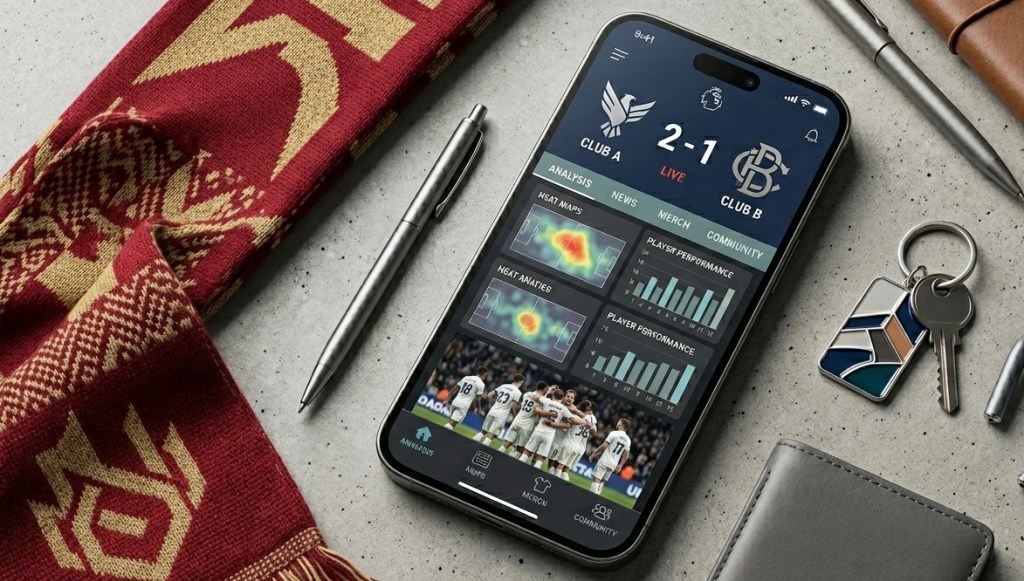
For decades, the “matchday experience” was defined by the tangible: the smell of fried onions outside the ground, the weight of a physical program, and the roar of the crowd. But as we move further into 2026, the modern football fan’s journey doesn’t start at the turnstiles, it’s accessible in their pocket, 24/7.
What was once a clunky news feed is now the most powerful tool in the “business of fandom.” From the Premier League to the lower divisions, football clubs have realised the endless potential in having an official app.
More Than a Scoreboard: The Evolution of Content
The era of checking “Live Scores” and calling it a day is over. Today’s club apps are immersive media hubs designed to keep fans engaged long after the final whistle.
- Original Programming: Clubs like Manchester City and Real Madrid have pioneered “Studio” models, producing high-end documentaries and behind-the-scenes content that rivals Netflix.
- Tactical Deep Dives: For the “laptop fan” generation, apps now provide data, and player performance metrics that were once reserved for professional analysts.
- Augmented Reality (AR): Some clubs have integrated AR features that allow fans to point their phone at the pitch to see live player stats overlaying the action, or even “place” a 3D version of the new kit in their living room before buying.
The Business of Fandom: Why Clubs Need Your Data
Behind the slick interface lies a strategic shift in how clubs operate as businesses. In a world where social media algorithms control who sees what, an official app gives a club Direct-to-Consumer (DTC) power.
By moving fans into their own ecosystem, clubs own the data. They know what you watch, which player’s shirt you’re most likely to buy, and whether you prefer a vegan pie or a traditional pint. This “first-party data” allows for hyper-personalised marketing, meaning the merchandise offers you receive are actually relevant to you, rather than a generic offering.
Enhancing the Physical Experience
Interestingly, the digital shift hasn’t killed the physical matchday; it’s streamlined it. The modern app serves as a digital Swiss Army Knife for the match-going fan:
- Digital Ticketing & NFC: No more printing PDFs. Your phone is your entry pass, your loyalty card, and your wallet.
- In-Seat Ordering: High-tech stadiums now allow fans to order food and drink via the app to be collected at a specific time, cutting down those notorious half-time queues.
- Connectivity: With “Smart Stadiums” becoming the norm, club apps utilize local Wi-Fi and 5G to provide exclusive multi-angle replays that you can watch while sitting in the stands.
The Gamification of Loyalty
Perhaps the most significant shift is the rise of “gamified” fandom. In recent we’ve seen a move toward Blockchain and NFT-based rewards where “fan tokens” or digital stickers earned through the app can be traded for real-world experiences—like a pitch-side tour or a meet-and-greet with a club legend.
Apps are no longer just about consumption; they are about participation. Whether it’s voting for the “Man of the Match,” predicting the starting XI, or competing in global fan leaderboards, the app has turned the passive act of watching into an active, competitive experience.
The Bottom Line
The club app has become the glue between the heritage of the sport and the demands of the digital age. For the modern editorial platform the app represents the transformation of a “supporter” into a “user,” and a “club” into a “global entertainment brand.”
As we look toward the 2026 World Cup and beyond, the question for clubs is no longer “Do we need an app?” but “How do we make our app the first one our fans want to open?”
 thematchsuite.co.uk
Leave a comment