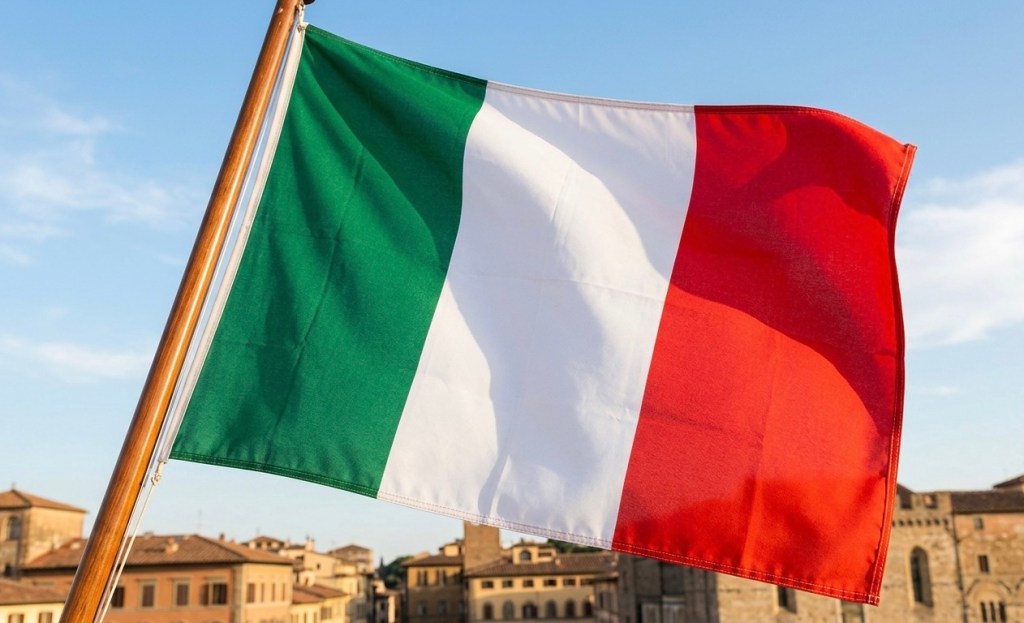
On 1 April 2026, Italy lost a World Cup qualifying playoff to Bosnia and Herzegovina on penalties in the Bosnian city of Zenica. It was, as Gazzetta dello Sport put it the next morning, “the third apocalypse.” For the third consecutive tournament, the four-time World Cup winners have failed to qualify, a reality that is scarcely believable for a country that has won football’s biggest prize on four occasions.
The consequences, for Italian football, for the sport’s commercial landscape, and for the millions of Italian-descended fans in the World Cup host cities are both significant and far-reaching.
How did Italy fail to qualify for the 2026 World Cup?
Italy’s chances of reaching the tournament ended after a penalty shootout loss to Bosnia and Herzegovina in a qualifying playoff. Coach Gennaro Gattuso’s side were reduced to ten men after Alessandro Bastoni’s first-half sending off, let slip a 1-0 lead, and crumbled in the shootout.
The fact that Italy even had to play Bosnia is a sign of how bad things have become. While the rest of Europe’s elite booked their places by winning their qualifying groups with ease, the Azzurri finished second behind Norway , losing early on to the Scandinavians in circumstances that meant realistically avoiding the playoffs was never really in their hands.
The players who fell short are not journeymen. This is a squad full of elite footballers who play for Inter Milan, Juventus, and Manchester City. The failure, then, is arguably structural and tactical rather than purely one of talent. Gattuso resigned days after the defeat.
The fallout inside Italian football
The shockwaves have been immediate and severe. Italian Football Federation president Gabriele Gravina resigned his post, having overseen two consecutive World Cup qualification failures. The new federation president is set to be elected on 22 June. Gianluigi Buffon also stepped away from his role with the national team setup. The legendary goalkeeper’s departure underscores the sense that an era has definitively ended.
The wider picture of Italian football is troubling. No Italian club has won the Champions League since 2010. Italy are due to co-host Euro 2032 with Turkey, but UEFA President Aleksander Ceferin has warned the country could be stripped of hosting rights due to the state of its stadiums: “I just hope that the infrastructure will be ready. If that’s not the case, the tournament will not be held in Italy.”
The pain stands in stark contrast to Italy’s success in other sports. Italy claimed a record 30 medals at the recent Milan-Cortina Winter Olympics, including 10 gold, and left the 2024 Paris Summer Games with 40 medals. Tennis star Jannik Sinner, a four-time Grand Slam winner, is among the country’s sporting elite. Football’s failure is not a national sporting crisis. Instead, it is a football-specific one, which in some ways makes it harder to accept.
A third consecutive absence: the historical weight
The numbers are damning. Italy has won only one match at the World Cup finals since lifting the trophy for the fourth time in 2006. An entire generation of Italian children has now grown up without ever seeing the Azzurri at the tournament.
The absences from 2018 and 2022 were painful enough. A third consecutive failure, at a tournament being held in North America where Italian-American communities had been anticipating the Azzurri’s arrival for years makes this one especially hard to swallow.
The economic consequences: Italian America and the host cities
This is where Italy’s absence carries a dimension that goes beyond the pitch. The 2026 World Cup is being held across eleven American host cities: New York/New Jersey, Los Angeles, Dallas, Atlanta, Miami, Seattle, Boston, Philadelphia, San Francisco Bay Area, Kansas City, and Houston. Several of these cities are home to enormous Italian-American populations. These communities would have been among the most commercially engaged supporters of any team at the tournament.
According to the US Census Bureau, approximately 17.8 million Americans are of Italian descent. This is a community that, in the context of a “home” World Cup, represents an enormous pool of potential fans, ticket buyers, hospitality customers, merchandise purchasers, and restaurant and bar attendees.
Much of that projection was built on the assumption that the world’s most passionate football nations, including Italy, would be sending travelling supporters. Italian fans following their team to New York, Philadelphia, and Boston would have spent heavily on flights, hotels, restaurants, match tickets, hospitality packages, and merchandise. The Italian-American contigency in those same cities would have mobilised around their national team in ways that generate significant local economic activity, including packed bars, sold-out restaurant bookings, merchandise sales, and organised supporter events.
That entire commercial story no longer exists. The travelling Italian fans are not coming. The Italian-American communities in New York, Philadelphia, and Boston will have no national team to rally behind. The restaurants in South Philadelphia’s Italian Market, the bars in Boston’s North End, New York’s remaining Little Italy neighbourhoods will all trade a normal summer rather than a World Cup one tied to an Azzurri campaign.
The wider commercial picture of a World Cup without Italy
Italy’s absence also has implications beyond the host cities. Italy is one of European football’s most commercially powerful brands. Its shirt, its players, its history, and its global fanbase generate enormous value for broadcasters, sponsors, and kit manufacturers alike. A team featuring players from Inter, Juventus, Napoli, and the Premier League’s biggest clubs carries global appeal that translates directly into viewing figures and commercial engagement.
The 2026 World Cup arrives in a fundamentally different media environment, with streaming platforms, social media, and a much larger immigrant population that treats football as a primary passion. Italy’s absence removes one of the storylines and one of the most significant audiences broadcasters and sponsors had been counting on.
For FIFA, the absence of a four-time World Cup winner from an already controversy-laden tournament (see: the ticket pricing scandal, the dynamic pricing backlash) is an unwelcome additional story. For the tournament’s commercial partners, it is one fewer guaranteed audience of millions.
Is there any way for Italy to still qualify for the 2026 World Cup?
There is a theoretical scenario in which Italy could still appear at the tournament. If Iran, who qualified, were to withdraw, FIFA regulations state a replacement would be selected — likely the highest-ranked non-qualified team, which at this stage would be Italy. This remains a remote possibility rather than a realistic expectation, and Italian fans would be right to plan for a summer without the Azzurri.
The more pressing question is what comes next for the national team. With a new federation president to be elected in June and the coaching role vacant, Italy begins a rebuild with Euro 2032 which it is still scheduled to co-host as the medium-term target. The talent base exists. The structural and governance problems that produced three consecutive absences from the world’s biggest tournament do not resolve themselves, however, and the next appointment at federation and coaching level will be among the most consequential decisions Italian football has made in a generation.
For now, Italy watches from the outside as the World Cup comes to the cities where its people have built communities, businesses, and lives over the past century. It is, in every sense, a missed opportunity.
 thematchsuite.co.uk
Leave a comment